Guides
New York ATM surcharge rules and licensing for route operators
ATM route profitability in New York hinges on NYDFS money transmitter licensing, surcharge disclosure rules, and bodega foot traffic patterns.
What to take away
- ATM route profitability in New York turns on licensing, surcharge disclosure and foot traffic, not just machine count.
- A New York Department of Financial Services money transmitter license is the long pole for any operator transmitting funds for others.
- Surcharge and fee notices on the machine and on premises are set by Regulation E and the Electronic Funds Transfer Act.
- Bodega and foot traffic patterns, not raw population, decide which New York City blocks pay.
- Placement commission structure, usually rent or a share of surcharge revenue, sets the ceiling on route economics.
How New York regulates ATM route operators
New York splits ATM oversight between federal consumer rules and state financial services law. The federal side covers fee disclosure and error resolution. The state side covers money transmission, which is the part that trips up new routes.
An ATM that only dispenses cash for a bank you already contract with is one thing. An ATM that takes funds from customers and routes them to a bank or network is money transmission in New York. That triggers the New York Department of Financial Services money transmitter licensing regime.
Enforcement is not theoretical. DFS has fined operators for unlicensed transmission, and the fines scale with volume. A route of twenty machines in Brooklyn can cross the threshold fast.
Most operators also register with FinCEN as a money services business and run a Bank Secrecy Act anti-money laundering program. New York adds its own reporting and examination layer on top.
If you are new to the state, the Licenses and compliance guide maps the federal and state filings in order.
New York Department of Financial Services money transmitter licensing
DFS licenses money transmitters under Article 13-B of the New York Banking Law. The application is not a formality. It asks for audited financials, a surety bond, fingerprints, and a compliance officer with a clean record.
NYDFS money transmitter application
- Audited financials
- Surety bond sized to volume
- Fingerprints submitted
- Compliance officer with clean record
- Call reports and annual renewal
- Notify DFS of material changes
The bond is the number most operators underestimate. It is set by the volume you expect to transmit, and DFS can require more as you grow. Budget it before you sign any placement agreement.
Processing time runs months, not weeks. You cannot lawfully transmit while the application is pending. Some operators work through a licensed sponsor in the meantime, which costs margin but keeps machines running.
Once licensed, you file call reports and renew annually. New York also expects you to notify DFS of material changes, including new ownership or a large jump in volume.
Check the license status of any processor or vault service you use. If your cash supplier is unlicensed, DFS can treat your route as part of the same problem.
State surcharge and disclosure rules on New York machines
New York does not cap the surcharge an operator may charge. It does require that the fee be disclosed before the transaction is completed, and that the customer can cancel without cost.
The disclosure content comes from federal Regulation E. The 12 CFR 1005.7, Initial Disclosures rule lists what a customer must be told about fees, liability and error rights.
The on-machine notice is separate. The 12 CFR 1005.16, Disclosures at Automated Teller Machines rule covers the fee notice that must appear on the machine and, where applicable, on the premises.
In practice that means a sticker or screen notice on the ATM, plus a sign visible from the machine. Bodega owners often remove signage during cleaning. Build a weekly check into your service visit.
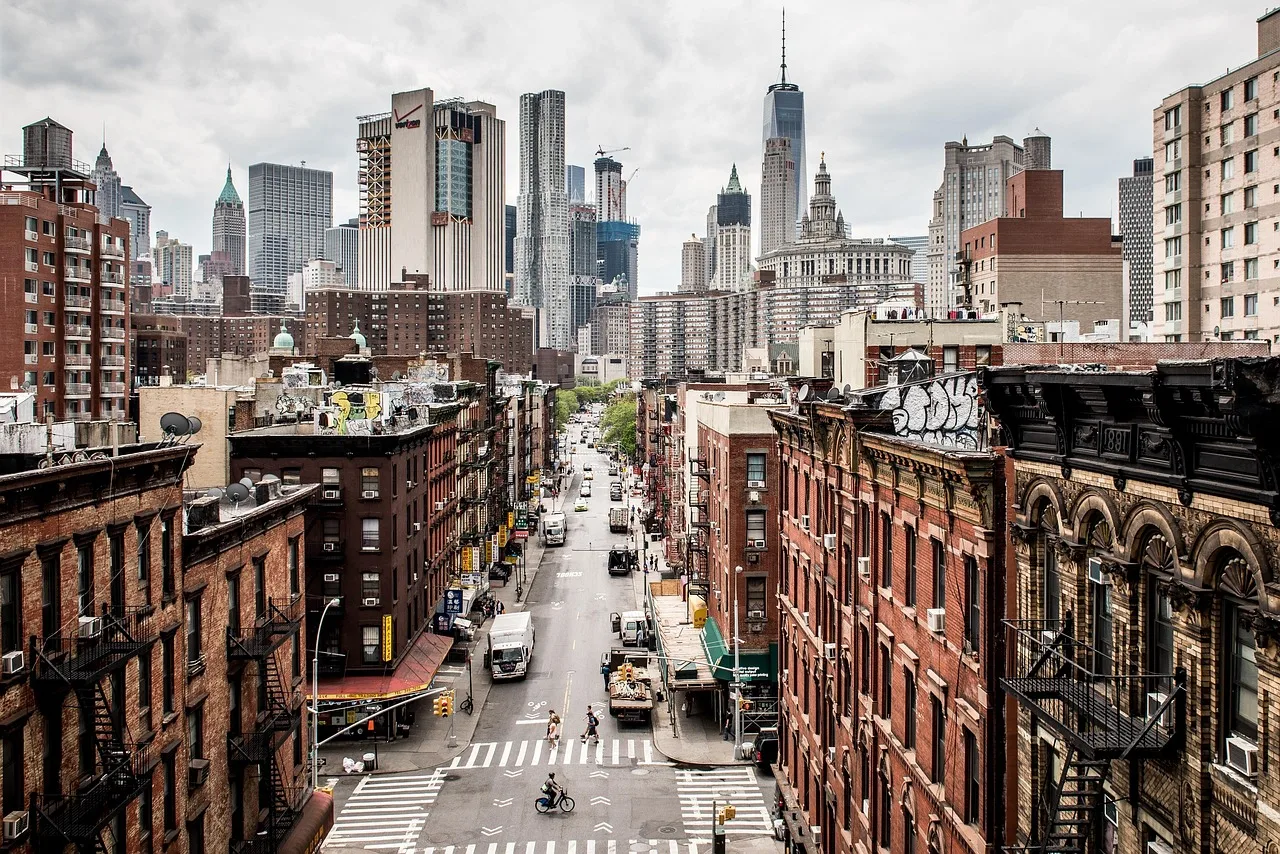
Surcharge levels in New York City run above the national average because rents and foot traffic are higher. A common range is three to four dollars per withdrawal at a busy Manhattan bodega. That is a market observation, not a legal limit.
New York also requires clear disclosure when a customer is offered a currency conversion. If your machine offers dynamic currency conversion, the screen must show the conversion rate and the final amount before consent.
Bodega and foot traffic patterns that drive route economics
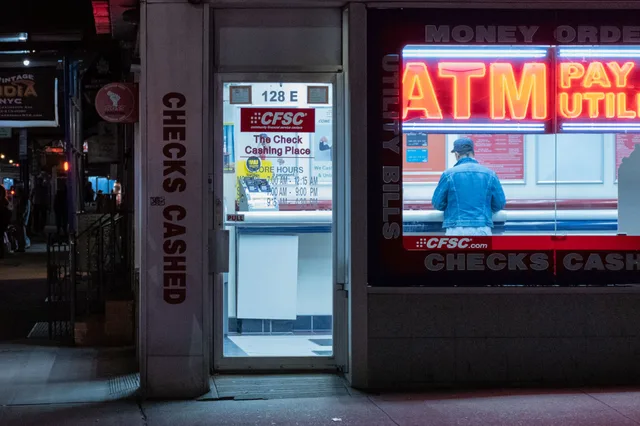
The bodega is the core New York ATM host. It is open long hours, sits on a residential corner, and serves customers who pay in cash. That combination produces steady withdrawal volume.
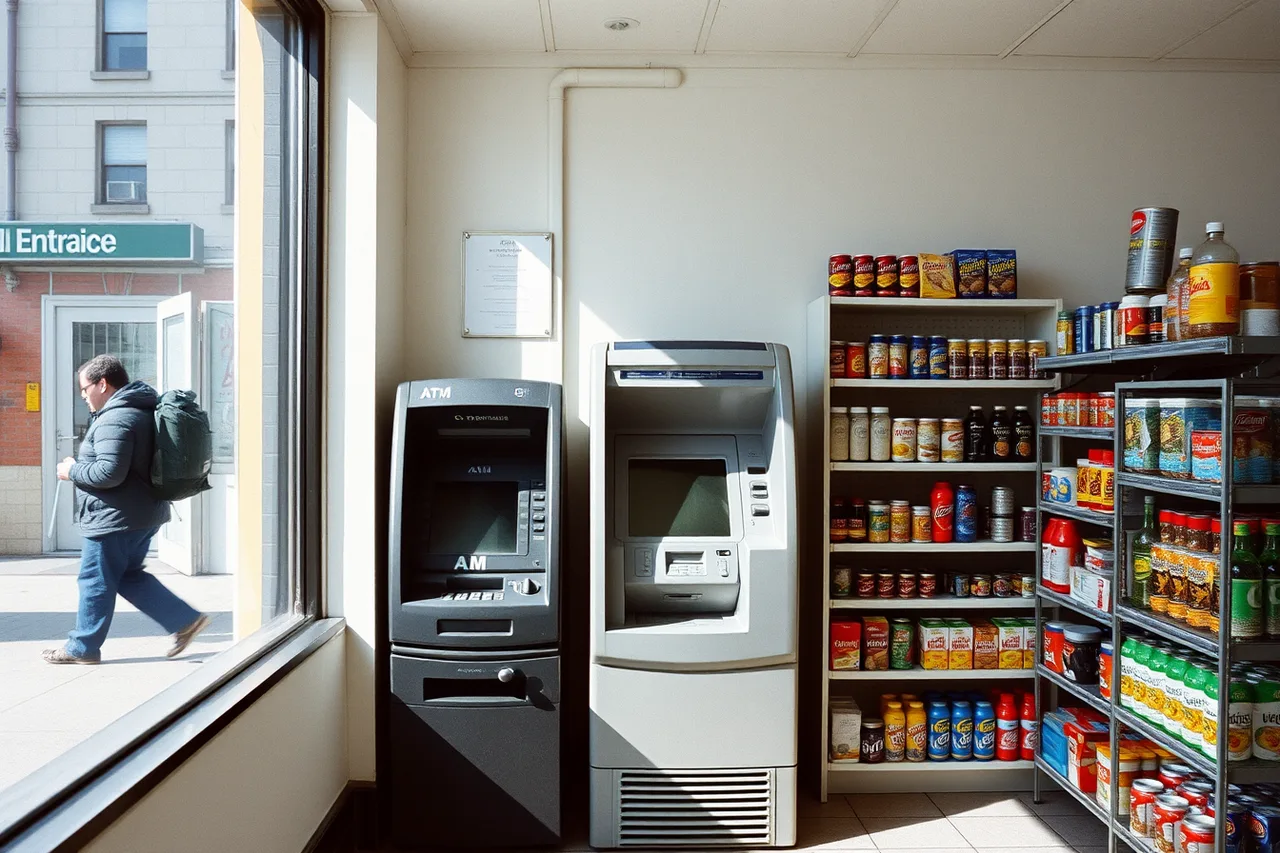
Foot traffic matters more than population density. A block with 8,000 daily pedestrians can beat a block with twice the residents if those residents drive everywhere.
The site selection review covers how to score a corner before you commit. In New York the score is dominated by three things: transit exits, late-night food, and cash-heavy retail.
Subway entrances are the strongest single signal. A machine within a short walk of a busy station picks up commuter withdrawals in the morning and evening peaks.
Cash use in New York remains high by national standards, but the trend is uneven. The CE home : U.S. Bureau of Labor Statistics data on household spending shows how cash budgets vary by income and age group, which helps you pick the right block.
National transaction counts also inform planning. The Federal Reserve Board - Federal Reserve Payments Study (FRPS) tracks ATM and cash withdrawal volumes that you can use as a baseline when forecasting a new site.
A worked example helps. Take a bodega near a Brooklyn subway stop with 600 withdrawals a month at a $3.00 surcharge. That is $1,800 in gross surcharge. Subtract $600 rent, $250 in cash delivery and processing, and $150 in service and parts. Net is roughly $800 a month before tax, which is a healthy single machine.
Now move the same machine to a low-traffic block with 250 withdrawals. Gross falls to $750, and the fixed costs do not. The site loses money. That gap is why profitable ATM route locations are found on foot, not on a map.
Placement commissions and rent in dense New York City blocks
Placement commission structure in New York City usually takes one of three forms: flat monthly rent, a percentage of surcharge revenue, or a hybrid with a minimum.
Placement commission structures
Flat rent
- Typical use
- Manhattan
- Rate
- Fixed monthly
- Forecast ease
- Easy
- Host upside
- None
Percentage
- Typical use
- Outer boroughs
- Rate
- 20-40% of surcharge
- Forecast ease
- Variable
- Host upside
- Full
Hybrid
- Typical use
- Bodegas wanting upside
- Rate
- $300 plus 20%
- Forecast ease
- Mixed
- Host upside
- Above threshold
Flat rent is easier to forecast and common in Manhattan, where landlords want predictable income. Percentages are more common in outer boroughs and in bodegas that want upside.
A typical percentage runs from twenty to forty percent of surcharge revenue. A hybrid might guarantee the host $300 a month plus twenty percent above a threshold.
Read the placement agreement before you sign. Watch for exclusivity clauses that block you from nearby sites, and for termination rights that let the host cancel on short notice after you have paid for installation.
Rent in dense blocks is the largest single cost. A machine in a Midtown location can pay more than $1,000 a month in host fees. That only works with high withdrawal counts and a surcharge near the top of the market.
Cash logistics add a second layer. Armored carrier routes in New York are expensive because of traffic and parking. Consolidate deliveries across nearby machines to spread the cost.
Downtime, service windows and cash access in Manhattan
Downtime is the quiet killer of New York route economics. A machine that is out of cash on a Saturday afternoon loses the highest-volume hours of the week.
Before adding a Manhattan site
- Host allows early-morning cash delivery
- Nearest loading zone and posted hours checked
- Receipt printer and error log working
- Cash low-balance alert set before weekend
- Surcharge notice visible from customer position
- Host after-hours contact recorded
- Cancel button tested so customer exits free
Manhattan adds constraints that other markets do not have. Loading zones are scarce, parking tickets are common, and some buildings restrict deliveries to early morning.
Plan service windows around those rules. Many operators run cash loads between 6 a.m. and 9 a.m., before commercial traffic peaks and before most bodegas get busy.
Use this checklist before adding a Manhattan site:
- Confirm the host allows early-morning cash delivery.
- Check the nearest loading zone and its posted hours.
- Verify the machine has a working receipt printer and error log.
- Set a cash low-balance alert at a level that triggers a refill before the weekend.
- Confirm the surcharge notice is visible from the customer position.
- Record the host contact for after-hours access.
- Test the machine's cancel button so a customer can exit without a fee.
Error resolution matters too. Regulation E gives customers a right to dispute failed transactions, and you must respond within set timeframes. Keep a log for every machine.
Pricing is the last lever. Surcharge levels in New York are high, but pushing too far above the local norm drives customers to the next bodega. The pricing in 2027 analysis covers how to test a surcharge change without losing volume.