Guides
Miami ATM routes and Florida fee disclosure rules for tourists and locals
ATM route profitability in Miami hinges on Florida OFR licensing, fee disclosure rules, tourist corridor surcharges, and storm season cash planning.
What to take away
- ATM route profitability in Miami runs on tourist foot traffic, not year-round residents alone.
- Florida Office of Financial Regulation licensing is the first gate for anyone deploying machines in the state.
- State ATM fee disclosure requirements follow federal Regulation E and must appear on the machine and on screen.
- A typical South Beach surcharge runs $3.00 to $4.50 per withdrawal, against $2.50 to $3.00 on inland residential routes in Kendall or Hialeah.
- Storm season and winter high season force different replenishment schedules across the same route.
Why Miami cash demand looks different from the rest of Florida
Miami is not Orlando or Tampa. The cash pull comes from nightlife, international visitors and a large unbanked and underbanked population that uses cash for daily purchases. That mix changes how an ATM route performs.
Miami vs Inland Cash Patterns
South Beach club
- Withdrawals
- dozens nightly
- Withdrawal size
- low-value
- Customer type
- tourists
- Corridor effect
- two blocks matter
Little Havana cafe
- Withdrawals
- dozens nightly
- Withdrawal size
- low-value
- Customer type
- locals, tourists
- Corridor effect
- two blocks matter
Inland grocery
- Withdrawals
- fewer
- Withdrawal size
- larger
- Customer type
- residents
- Corridor effect
- county-wide
Tourists arriving from Latin America and Europe often carry cash and expect to withdraw small amounts frequently. A machine inside a South Beach club or a Little Havana cafe may see dozens of low-value withdrawals a night. An inland grocery store machine sees fewer, larger withdrawals.
The Bureau of Labor Statistics Consumer Expenditure Surveys show cash use varies by income, age and region, so Miami route pricing should follow corridor withdrawal counts, not a national average.
The Federal Reserve Payments Study tracks cash and ATM transaction volumes nationally. Route operators should read the direction of those numbers, not just the levels.
That means a Miami route cannot be priced like a Fort Lauderdale route. The corridor matters more than the county. A machine two blocks off Ocean Drive can earn less than one inside a hostel lobby on the same street.
For operators comparing metros, the local cash pattern is the first input. Comparing ATM route markets without weighing tourist cash demand will misprice Miami.
Florida Office of Financial Regulation licensing for ATM route operators
The Florida Office of Financial Regulation (OFR) regulates money services businesses in the state, including money transmitters. An ATM route operator who owns the cash and dispenses it to the public is generally operating as a money transmitter under Florida law, not merely as a machine owner.
ATM Route Licensing Sequence
- Register with Florida Division of Corporations
- Obtain local business tax receipts
- Apply for Florida OFR money transmitter license
- Submit fingerprints, background checks, business plan
- Provide proof of net worth and surety bond
- Register with FinCEN as an MSB
- Implement written AML program under BSA
That distinction matters. If you place a machine and a bank or armored carrier owns the cash, your licensing path is different from an operator who funds the vault cash directly. Most independent route operators fund the cash, so they fall under OFR oversight.
The OFR application requires fingerprints, background checks, a business plan, and proof of net worth. Florida also requires a surety bond.
Chapter 560, Florida Statutes, sets the minimum net worth and the surety bond amount, and the OFR money services business page states the current figures. Both are floors. The net worth has to be documented at application, and the bond has to stay in force while the license is active.
At the federal level, an ATM owner who charges a fee is usually an MSB and must register with FinCEN. That registration is separate from the Florida license. Both are required.
Florida OFR also expects anti-money laundering compliance under the Bank Secrecy Act. A route with ten machines needs a written AML program, a designated compliance officer, and transaction monitoring. The same rules apply whether you operate one machine or one hundred.
Corporate registration with the Florida Division of Corporations comes first. Local business tax receipts from the city or county come next. Then OFR. Operators who skip the state license risk fines and seizure of machines.
Licensing is not a formality. It shapes which venues will sign with you. Hotels and chain convenience stores ask for license numbers before they sign a placement agreement. A clean OFR record is a sales asset.
State ATM fee disclosure rules and what must appear on the machine
Florida follows federal Regulation E for ATM fee disclosures. The state does not layer a separate fee-notice regime on top of the federal rule, but the federal rule is specific and operators get cited for missing pieces.
Under 12 CFR 1005.7, Initial Disclosures, an ATM operator must disclose the fee for a cash withdrawal or balance inquiry before the consumer is committed to the transaction. That means the notice must appear on the machine or on the screen before the consumer completes the withdrawal.
The notice must state the amount of the fee. A sign that says "fee may apply" is not enough. The exact dollar amount, or the fact that a fee will be charged, must be clear.
Under 12 CFR 1005.16, Disclosures at Automated Teller Machines, the notice must be posted on or at the ATM. The rule also requires a notice on the screen or a paper notice before the consumer incurs the fee, and a notice that the operator may charge a fee.
Receipts are covered by 12 CFR 1005.9, Receipts at electronic terminals, which requires the machine to give the consumer a receipt at the time the transfer is made.
In practice, Miami operators should post a physical sign on the machine face and a screen notice that appears before the withdrawal amount is confirmed. The sign must be visible before the consumer uses the machine, not after.
A checklist for each machine:
ATM Fee Disclosure Checklist
- Physical fee notice attached to ATM
- Notice visible before consumer uses machine
- Screen notice before withdrawal amount confirmed
- Exact dollar amount of fee stated
- Notice that operator may charge a fee
- Paper notice available before fee incurred
Bilingual notices are not required by federal rule, but Miami venues often request them. A machine in Hialeah or Little Havana with only English signage generates complaints.
Surcharge pricing along the Miami tourist corridors
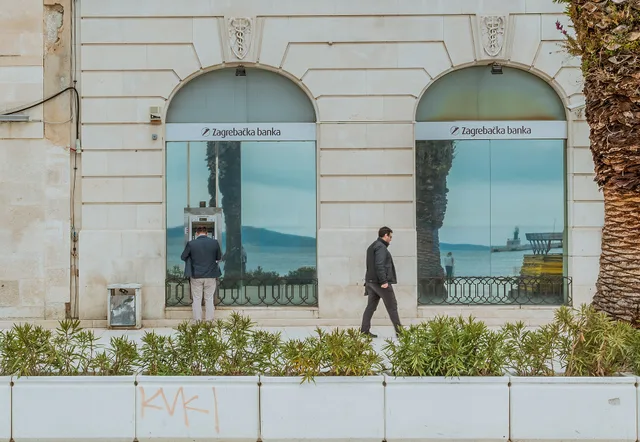
Surcharge pricing in Miami splits along two lines: the tourist corridors and the residential grid. The tourist corridors, South Beach, Brickell, Wynwood, Downtown and the airport area, support higher surcharges because the customer is transient and less price-sensitive.
Surcharge by Miami Corridor
Tourist corridors
- Examples
- South Beach, Brickell, Wynwood
- Surcharge level
- upper national range
- Customer price sensitivity
- low
- Best scenario
- mid surcharge, moderate volume
- Commission pressure
- high
Residential grid
- Examples
- Kendall, Hialeah
- Surcharge level
- lower
- Customer price sensitivity
- high
- Best scenario
- low surcharge, high volume
- Commission pressure
- moderate
A typical South Beach machine carries a surcharge of $3.00 to $4.50 per withdrawal, with nightclub and airport-area machines at the top of that band. A machine in a residential neighborhood in Kendall or Hialeah typically charges $2.50 to $3.00.
The surcharge affects placement economics directly. A venue that takes a high commission will push the operator to raise the surcharge, which can drive customers to a nearby bank ATM. The balance between surcharge and commission is the core negotiation.
Operators should model three scenarios for each Miami location: low surcharge with high volume, mid surcharge with moderate volume, and high surcharge with low volume. The mid scenario usually wins on tourist corridors.
Pricing in 2027 will depend on interchange, surcharge and commission trends.
Venue type also drives pricing. A nightclub can support a higher surcharge than a grocery store. A hotel lobby sits in between. The operator should set a floor surcharge and adjust by venue, not by route average.
Placement economics for bodegas, hotels and convenience stores
Miami's venue mix is unusual. Bodegas, cafeterias, independent hotels, hostels, convenience stores and pharmacies all host machines, and each has a different traffic pattern.
Placement Economics by Volume
- $900300 withdrawals at $3 surcharge
- $675150 withdrawals at $4.50 surcharge
A bodega in Little Havana may see steady daily cash withdrawals from regular customers. A hostel in South Beach may see bursts of withdrawals at check-in and checkout. A convenience store near the Port of Miami may see cruise passenger traffic on a weekly cycle.
Placement economics turn on four numbers: monthly withdrawals, average withdrawal size, surcharge, and venue commission. A machine with 300 withdrawals at a $3 surcharge grosses $900 before commission. A machine with 150 withdrawals at a $4.50 surcharge grosses $675. Volume usually beats surcharge on residential routes, and surcharge beats volume on tourist routes.
Operators should walk the corridor before signing. Finding profitable ATM route locations starts with observing foot traffic at different hours, not with a map. A corner that looks busy at noon may be dead at midnight.
Site selection for Miami should weigh tourist density, venue hours, and cash-only competitors. Site selection is not just about the address. It is about the hours the venue operates and the cash habits of its customers.
A simple way to judge an ATM route location is to ask the venue for its monthly card transaction count. If the venue runs mostly cards, the ATM will underperform. If it runs cash, the machine has a base.
Hotels are the most stable Miami venue type. They have front desk staff who can report outages, and they have predictable guest traffic. Bodegas are the most variable. Convenience stores near tourist corridors are the highest upside.
Seasonality, storm season and cash replenishment in Miami
Miami has two seasons that matter for an ATM route: the winter high season and the summer low season. Winter brings tourists, higher withdrawal counts and faster vault depletion. Summer brings locals, lower counts and slower turns.
Storm season runs from June through November. A named storm can close venues for days and strand cash in machines that cannot be serviced. Operators should plan replenishment around storm forecasts, not just around cash levels.
A practical seasonal plan for a Miami route:
Seasonality and replenishment
- Raise cash loads in November, before winter traffic lifts withdrawal counts, and step them back down in April.
- Set reload triggers from withdrawal counts per machine per week, not from a fixed calendar.
- Before June 1, cut loads at beach-level venues and hold reserve cash inland.
- Stop beach service runs once a mandatory evacuation is called, and confirm each venue's access and power after the storm passes.
- Rebuild loads in stages after the storm, watching withdrawal counts before returning to winter volumes.
Miami ATM Seasonal Cash Plan
- November-AprilIncrease replenishment frequency
- June-OctoberReduce cash loads
- Before storm warningPre-position cash at inland depots
- Before each stormConfirm venue access and generator status
- OngoingReview insurance for cash in transit and machine
An example: a route with five South Beach machines might load $20,000 per machine per week in February and $10,000 per machine per week in September. The same route needs a storm plan that moves cash out of beach-level machines before a mandatory evacuation.
Seasonality also affects venue commissions. Some Miami venues ask for higher commissions in winter because they know traffic is up. Operators should lock annual commission terms in the summer, when venues have less bargaining power.
Cash replenishment is a logistics problem as much as a financial one. Traffic on I-95 and the MacArthur Causeway can turn a two-hour service run into four hours. Route density matters more in Miami than in most metros because service time is unpredictable.
Operators who track withdrawal counts by month will see the pattern within a year. The first winter teaches more than any spreadsheet. The second winter lets you plan cash loads with confidence.