Guides
ATM route location analysis: a four-gate walk
Use ATM route location analysis to screen sites through four gates: build a list, walk the district, qualify the host, and test each stop against your route.
What to take away
- Prospecting is a funnel with four gates, and the point of each gate is to spend less time on sites that will not work.
- Most disqualification happens from the sidewalk, before you speak to anyone. Learn to do it fast and you can cover a district in a morning.
- The person behind the counter is almost never the person who can sign. Find out who is before you make your case.
- A site that already has a machine is worth approaching for what the host will tell you, even when they will not switch.
- Keep a written list with a stage against each name. Prospecting collapses when it lives in your memory.
ATM route location analysis is a sorting process, not a test of sales talent. You are trying to spend your attention on the small number of venues where cash does a job, someone can say yes, and the stop fits your existing round. Here is the funnel, gate by gate.
Gate one: build the list without leaving the desk
Choose a district you can already service, not a district you like. Every mile between stops is a cost you pay forever.
Build the list at your desk
- Pick a district you can already service
- List venues by category and hours
- Mark late-open venues and entry-fee venues
- Mark trades where cash is normal
- Note existing machines, including bank machines
- Finish with more names than you can visit
Within it, list venues by category and hours, using the demand signals in the site selection guide: late hours, entry fees, and trades where cash is normal. Treat these as reasons to investigate, not proof of demand. Note the existing machines you already know about, including bank machines, because their hours matter as much as their location.
Aim to finish this gate with more names than you can visit. A short list at the start means you will talk yourself into weak sites later.
Gate two: disqualify from the sidewalk
Walk the district at an hour that matters rather than at eleven on a Tuesday morning. You are looking for reasons to cross names off.
Disqualify from the sidewalk
Is a well-kept machine already in a good position?
cross it off
keep walking
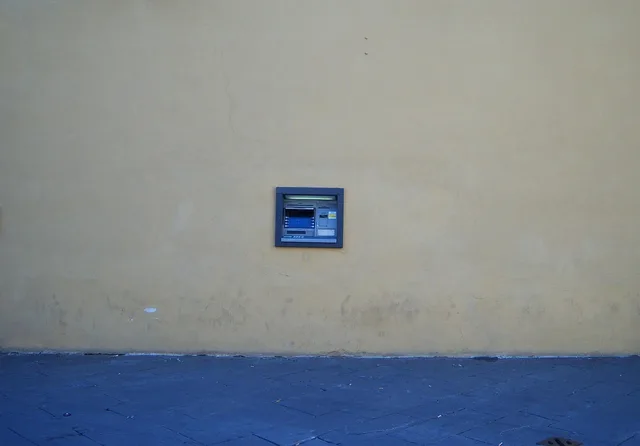
Cross off where a machine already sits in a good position and looks well kept. Cross off where no wall, corner, or alcove would take a machine without blocking a path.
Cross off premises unattended in a way you are not equipped for, a site that is a single-visit detour from everything you service, and a trade that plainly runs on cards with no cash friction.
Do not cross off for a scruffy frontage, a quiet moment, or an owner you have not met. Those are not evidence.
The remaining question at this gate is where a machine could physically go, and whether that position would work for a customer. Section 707 of the 2010 ADA Standards for Accessible Design addresses automatic teller machines and fare machines. Read the 2010 ADA Standards and get advice on how they apply to a specific site rather than deciding it yourself against a wall.
Gate three: the conversation
Ask for the owner or the manager by name if you can get it first. Introduce the reason you are there in one sentence and then ask questions rather than presenting.
Four questions do most of the work:
- When do customers here most often need cash?
- Is there an ATM here now, and who services it?
- Has an ATM been removed from this site, and why?
- Who has authority to approve an installation?
Four questions for the owner
- How often do customers ask for a cash machine?
- What do card fees cost on small transactions?
- Has a machine been here before, and what happened?
- Who else would need to agree?
The third question is the most valuable and the least asked. A machine that was removed tells you something about the count, the previous operator, or the host, and every one of those is worth knowing.
Do not negotiate money at this gate. If pressed, describe how a host share is calculated and what it depends on, and be honest that neither of you yet knows the volume. Choosing a commission structure before you know the site is how operators end up locked into the wrong shape for years.
Gate four: qualify against your own route
A site can pass every test above and still be wrong for you. Before you commit, check three things.
Qualify against your own route
- Does it fit a round you already drive?
- Can you fund the cash it will need?
- Can you service it at a tolerated hour?
- Calculate cash from expected dispense rate, not route average
Does it fit a round you already drive, or does it create a new trip? Can you fund the cash it will need on top of everything else, calculated from the dispense rate you expect, not a route average?
Can you service it at an hour the venue will tolerate? For late-hours venues, set a service window the host will accept and check whether your existing round can cover it; if not, account for the added trip before committing. The operations and workflow material covers scheduling in more detail.
If it fails the first test, the site has to be unusually strong to be worth a dedicated trip. If you cannot fund the cash, wait rather than starving your existing machines. If you cannot service it at a workable hour, do not commit until you have a route plan that can.
Working the list
Keep one line per venue: name, category, hours, stage, who signs, date of last contact, and what they said. Update it the same day. A prospect list that lives in your head produces the same five venues visited three times each and a district you never finished.
One line per venue
- Name
- Category
- Hours
- Stage
- Who signs
- Date of last contact
- What they said
Expect most names to end at gate two, a good share of the rest at gate three, and a small number to reach an agreement. That shape is normal and is not a sign the district was wrong.
What to do with a no
Ask what would change the answer, and when. Venues change hands, agreements expire, and service goes downhill somewhere else. The operator who left a straight impression and asked to be called is the one who gets the site when the current machine disappoints.
A district worked once is a list. A district worked twice, a year apart, is a pipeline. As the route gets bigger, use that pipeline to see which districts and contacts are already worked before opening new territory; the expansion material develops that planning further.
What prospecting cannot settle
Whether your business model and state require registration or licensing is not a question the venue can answer, and it should be settled before you place anything. There is no single state licensing answer for every ATM route: requirements depend on the state and the services your business performs. Check with the state's banking or financial-services regulator about applicable licensing rules. At the federal level, FinCEN's statement on independent ATM operators addresses the Bank Secrecy Act question; it does not resolve state licensing. The licensing and compliance overview covers the distinction.
Common questions
How many venues should I approach before expecting a placement?
More than feels reasonable, and the number is specific to your district. Track it yourself for a month and you will have a better figure than any published one.
Is cold walking still worth it?
For this trade, usually yes, because the decision maker is often physically present and the pitch is short. It also does the sidewalk disqualification at the same time, which a phone call cannot.
Should I offer a higher commission to win a good site?
You can, but decide it against the count you expect rather than against a competitor's offer. A site won on price and lost on service is worse than one you never had.