Guides
ATM Route Bank Sponsorship in Canada: Direct vs. Sponsor
ATM route bank sponsorship Canada uses Interac-certified sponsors, not direct bank deals. Compare direct and sponsor models on cost and control.
What to take away
- ATM route bank sponsorship in Canada rarely means a direct settlement agreement with a bank. Interac network access comes through an Interac-certified sponsor, and the sponsor carries the settlement obligation.
- Named sponsors that do this work include Moneris Solutions, Everlink Payment Services, NCR Atleos, Fiserv and Diebold Nixdorf. Central 1 Credit Union provides the same channel for many credit unions.
- Direct agreements sit with Interac member institutions such as RBC Royal Bank, TD Canada Trust, Scotiabank, BMO Bank of Montreal and CIBC. National Bank of Canada, Desjardins Group, Laurentian Bank and ATB Financial also hold membership.
- A sponsor agreement usually bundles network access, cash settlement and processing. You can split them, but the sponsor still answers for the network side.
- Direct agreements exist mainly for large deployers with audited financials and a long operating record. For a route under a few hundred machines, the sponsor model is the realistic path.
- Terms come from the sponsor and from provincial rules, not a single national template. Two operators in different provinces can hold very different contracts for the same machine count.
- Neither model removes your own compliance duties. Reporting, receipts and record retention stay with you.
What is being compared
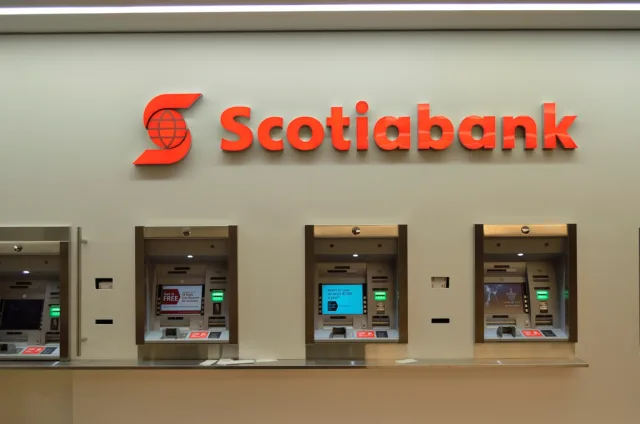
Canadian ATM operators reach the Interac network in two ways. In a direct model, you contract with a bank or chartered institution that settles your transactions itself. RBC Royal Bank, TD Canada Trust, Scotiabank, BMO Bank of Montreal and CIBC all hold Interac membership and could settle directly.
In a sponsor model, an Interac-certified sponsor settles on your behalf and you sit underneath that relationship. Moneris, Everlink, NCR Atleos and Fiserv are certified to carry that role.
The sponsor, not you, holds the network membership. If the sponsor loses certification or exits the business, your machines stop settling until you find a replacement.
The criteria that matter
Direct agreement
- Typical named parties
- RBC Royal Bank, TD Canada Trust, Scotiabank, BMO, CIBC
- Who holds network membership
- You, through the bank
- Minimum volume typically discussed
- Very large fleets
- Settlement timing
- Negotiated
- Setup effort
- Heavy, audited financials
- Per-transaction economics
- Negotiable
- Exit difficulty
- Contract term
- Provincial variation
- Applies
Sponsor agreement
- Typical named parties
- Moneris, Everlink, NCR Atleos, Fiserv, Diebold Nixdorf
- Who holds network membership
- The sponsor
- Minimum volume typically discussed
- Smaller fleets, varies by sponsor
- Settlement timing
- Set by sponsor contract
- Setup effort
- Moderate, application and review
- Per-transaction economics
- Sponsor schedule, thin margin for you
- Exit difficulty
- Contract term plus replacement sponsor search
- Provincial variation
- Applies
Sponsors quote per-transaction and monthly fees that move with volume. No public national schedule exists, so the figures below are typical ranges, not quotes.
Direct vs Sponsor Agreement
Direct agreement
- Named parties
- RBC, TD, Scotiabank, BMO, CIBC
- Network membership
- You, through bank
- Minimum volume
- Very large fleets
- Setup effort
- Heavy, audited financials
- Per-transaction economics
- Negotiable
- Exit difficulty
- Contract term
Sponsor agreement
- Named parties
- Moneris, Everlink, NCR Atleos, Fiserv
- Network membership
- The sponsor
- Minimum volume
- Smaller fleets
- Setup effort
- Moderate, application and review
- Per-transaction economics
- Sponsor schedule, thin margin
- Exit difficulty
- Contract term plus replacement search
In most markets, a sponsor's per-transaction cut runs from a few cents to about $0.25, with monthly minimums typically $25 to $100 per terminal. The surcharge the machine charges the cardholder is separate and usually $1.50 to $3.00 per withdrawal.
Option by option
Direct agreement. You apply to a bank or trust company that already participates in Interac. RBC Royal Bank, TD Canada Trust, Scotiabank, BMO and CIBC all qualify. Expect a documented operating history, audited statements and a volume commitment before anyone takes the call.
The upside is control over settlement timing and pricing. The downside is the effort, and a small route will not clear the internal threshold.
Sponsor agreement. You sign with an Interac-certified sponsor such as Moneris, Everlink, NCR Atleos, Fiserv or Diebold Nixdorf. The sponsor handles settlement, and often processing and terminal management as well. This is how most Canadian routes connect. Read the termination clause first, because switching sponsors mid-contract is the expensive part.
Split arrangement. Some operators keep processing with one vendor and settlement with a sponsor. It works, but the two contracts can contradict each other on chargebacks and downtime responsibility. Get both in writing before you deploy.
A sponsor agreement is a settlement relationship. It is not a partnership. When the sponsor's terms change, your route economics change with them.
Where each one wins
Direct wins for a large, well-capitalized deployer that wants settlement timing it controls and enough volume to negotiate. It also wins where a single institution already handles your commercial banking and wants the whole relationship. Desjardins Group in Quebec and ATB Financial in Alberta are the usual counterparties for operators already inside those systems.
Sponsor wins for nearly everyone else: new routes, white label ATM bank sponsor arrangements, and operators who want to start without an audit trail. It is faster, and the sponsor absorbs work you would otherwise staff. Moneris and Everlink both work with independent deployers as well as their owner institutions.
Split arrangements win when processing is genuinely better elsewhere and you can afford the legal review. That is a narrow case. If a dispute over a failed transaction crosses two contracts, you carry the cost of sorting it out.
What none of them solve
No model removes your own obligations. You still file and retain records, you still handle consumer complaints at the machine, and you still bear the loss when a location underperforms. A sponsor settles transactions; it does not fill machines or find sites.
Provincial rules also sit outside the contract. Nothing in a sponsorship agreement changes what a province requires of you, and two operators on identical sponsor terms in different provinces can face different duties. Our guide to ATM route downtime and repair costs covers the operating side that no sponsor absorbs.
The same limit applies to tax treatment. Whether you treat route workers as contractors or employees is your call, and the consequences are real. The IRS explains the common-law test for independent contractor and employee status, and the same classification logic drives Canadian payroll exposure.
Costs and contracts to check
- Ask the sponsor for the current per-transaction rate and the monthly minimum in writing. Sponsor fees in most markets run from a few cents to about $0.25 per transaction, with monthly minimums typically $25 to $100 per terminal.
- Confirm who bears the loss on a chargeback and on a failed settlement.
- Get the termination notice period and any early exit fee in the contract itself. Notice periods commonly run 30 to 90 days.
- Check whether the sponsor permits you to add machines without a new application.
- Ask what happens to your fleet if the sponsor loses Interac certification.
- Settlement timing stated in days, not "promptly"
- Chargeback liability named
- Termination notice period named
- Certification loss addressed
For the revenue side of the same contract, see quoting an ATM route business job before you commit to a fee schedule. Recordkeeping that supports your deductions is covered in the IRS guidance on starting a business and keeping records, which applies to Canadian operators running cross-border equipment purchases.
Contract Terms to Verify
- Settlement timing stated in days, not 'promptly'
- Chargeback liability named
- Termination notice period named
- Certification loss addressed
Example
A two-machine route in Ontario signs with a processor acting as sponsor, of the kind Moneris or Everlink provides. Settlement lands two business days after the transaction, the sponsor takes a per-transaction cut, and the operator keeps the surcharge. When the operator later adds four machines, the sponsor applies the same schedule. Nothing is renegotiated, and nothing improves.