Guides
Working with US armoured car services for ATM cash in transit
An atm route operator's guide to US armoured car services: national and regional CIT providers, per-stop and per-mile rates, insurance limits and contract terms.
What to take away
- Running an atm route on outsourced cash means paying for three separate things: the stop, the mileage between stops, and the insurance behind both.
- National providers (Brink's, Loomis, GardaWorld, Dunbar, Rochester Armored Car) serve multi-state routes; regional carriers often beat them on price inside a single metro.
- Per-stop rates in the US generally run from the low teens for a plain deposit pull to the high twenties for a full cash load, plus a per-mile charge on top.
- CIT contracts are won or lost on service windows, missed-window penalties and the escalation clause, not on the headline rate.
- Vetting means checking licensing, cargo insurance certificates, driver screening and FinCEN MSB registration before a single bag moves.
What cash-in-transit cover actually includes for an ATM route
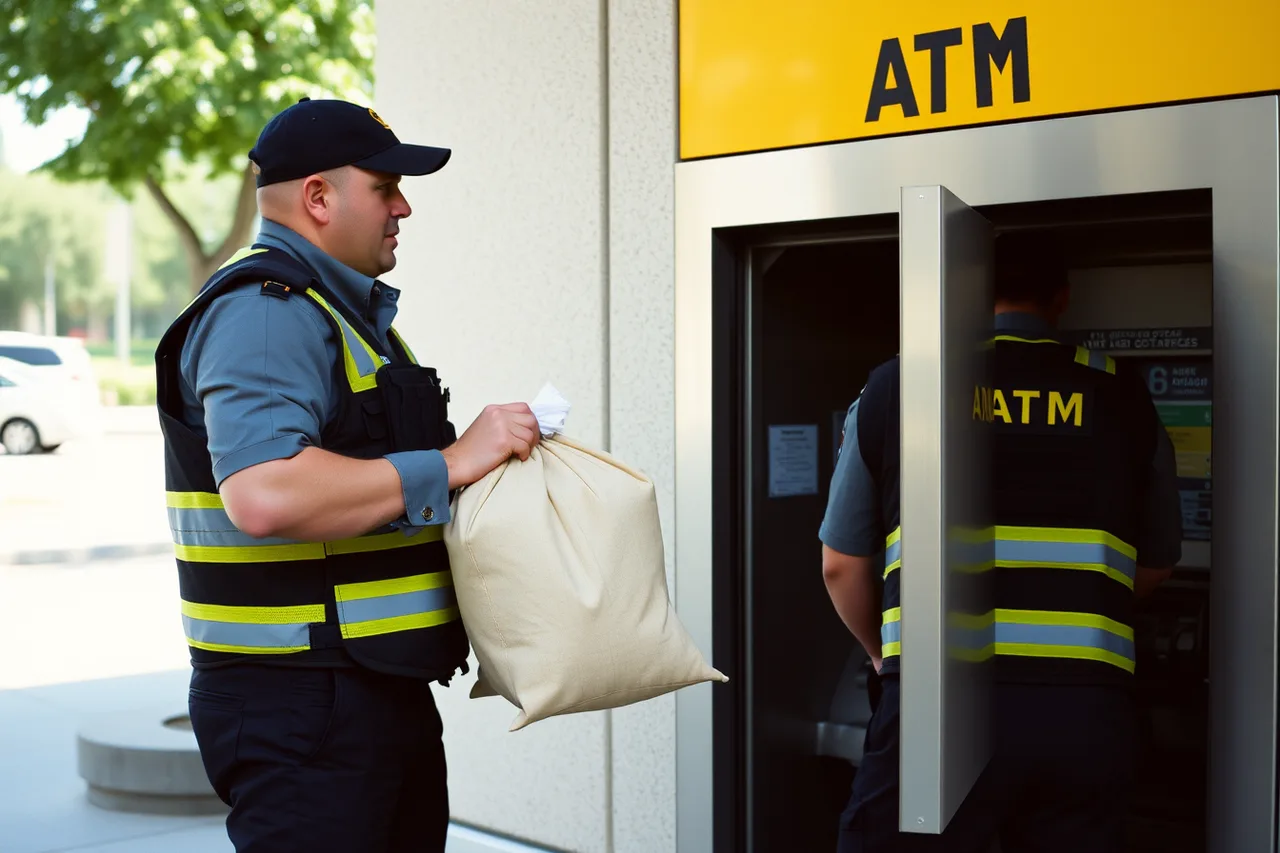
Cash in transit, usually shortened to CIT, is the physical movement of currency and coin between a vault, a bank branch and your machines. For an ATM route it covers four jobs: loading notes into the cassette, pulling deposited cash and checks, delivering that deposit to a bank or processing center, and reporting what moved.
The Federal Reserve issues and circulates the notes your machines dispense, and its regional cash offices are where the supply chain starts. Federal Reserve currency explains how notes enter circulation through depository institutions, which matters because your CIT carrier is usually drawing from the same wholesale channel.
What CIT does not cover is the machine itself. Vandalism, skimming devices, anchor bolts and alarm wiring sit outside a standard cash-in-transit agreement. Those risks belong to your own policy, and the gaps are worth mapping before you sign anything: ATM route insurance rarely lines up perfectly with what the carrier insures.
A carrier's liability usually begins when the crew takes possession of the sealed bag and ends when the receiving bank signs for it. Anything before or after that window is yours. Read the possession clause first, because it defines the exact minutes you are exposed.
Cover also includes the crew's own procedures: dual custody, sealed tamper-evident bags, GPS-tracked vehicles, and a manifest reconciliation at the end of each run. Ask to see the written procedure, not a sales summary.
Regulation E governs the customer side of a disputed ATM transaction, including error resolution and disclosure duties. 12 CFR Part 205 sets those timelines, and they run independently of whatever your CIT contract says about cash handling.
National and regional providers serving US ATM operators
The national names are Brink's, Loomis, GardaWorld, Dunbar Armored and Rochester Armored Car. All five run multi-state networks and can cover a route that crosses state lines, which matters in metros like the New York tri-state area or the Chicago and Northwest Indiana corridor.
National carriers price on volume and density. A route with fifty stops in one metro gets a very different quote from a route with fifty stops spread across three states. If your machines cluster, you have room to negotiate; if they sprawl, you pay for the sprawl.
Regional and local carriers fill the gaps the nationals price out. Examples include Rochester Armored Car in the upper Midwest, Davis Bancorp in the Chicago area, and a long tail of single-metro operators in Texas, Florida, Georgia and Arizona. These firms often run tighter windows because their dispatch radius is smaller.
In Texas, the larger regional carriers work out of Dallas, Houston, San Antonio and Austin, and several will cover West Texas routes the nationals treat as remote. Florida has strong coverage along the I-4 corridor and in South Florida, with thinner service in the Panhandle.
California is its own market. Density in Los Angeles, the Bay Area and San Diego keeps per-stop pricing competitive, while routes into the Central Valley or the desert metros carry mileage premiums that erase the advantage.
New York, Illinois and Nevada each have quirks. New York City routes face congestion and parking constraints that carriers price into the stop. Chicago has similar downtown friction. Nevada routes outside Clark County can sit at the edge of a carrier's service area.
Ask any provider for their actual service map, not a coverage claim. A carrier that advertises nationwide service may subcontract your stop to a local firm you never vetted. Subcontracting is common and not automatically bad, but you should know who is standing at your machine.
Typical per-stop and per-mile rate structures
CIT pricing has two main components and a set of add-ons. The stop fee pays for the crew's time at the machine. The mileage fee pays for getting there. Add-ons cover fuel surcharges, after-hours calls, emergency vault runs and coin orders.
Per-stop pricing in the US generally falls between roughly $12 and $30. A simple deposit pull sits at the low end. A full cassette load with reconciliation sits at the high end. Stops requiring two-crew entry, tight downtown access or a second visit in the same day push higher.
Per-mile charges typically run from about $1.50 to $3.50, often with a minimum radius included in the stop fee. Fuel surcharges are usually indexed to a published diesel benchmark and reset monthly or quarterly. Petroleum & Other Liquids publishes the weekly diesel and gasoline series most carriers reference when they set that index.
Typical rate structures
| Route profile | Stops per run | Typical stop fee | Typical mileage fee | Monthly ballpark |
|---|---|---|---|---|
| Dense urban, single metro | 20 to 30 | $12 to $18 | $1.50 to $2.25 | $3,000 to $5,500 |
| Suburban ring | 15 to 25 | $15 to $22 | $2.00 to $2.75 | $3,500 to $6,500 |
| Rural or multi-county | 8 to 15 | $20 to $30 | $2.50 to $3.50 | $3,000 to $6,000 |
| Multi-state corridor | 12 to 20 | $18 to $28 | $2.25 to $3.25 | $4,500 to $8,000 |
Those figures are directional. Your quote depends on density, frequency, contract length and how much of the risk the carrier absorbs. A two-year commitment with weekly service will price better than a month-to-month arrangement with on-call delivery.
Frequency is the biggest lever you control. Moving a low-volume machine from weekly to biweekly replenishment cuts stops without cutting coverage, provided the cassette holds enough notes. Model the cash-out risk before you cut, because an empty machine costs more than a stop.
Watch the minimum charge. Many carriers bill a minimum per run regardless of stop count, so a short route can cost the same as a full one. If your route is thin, ask whether the carrier will combine it with a neighboring run.
Fuel is the volatile line. A surcharge tied to a public diesel index moves with the market in both directions, which is fairer than a flat fuel fee the carrier can raise at will. Cap the surcharge percentage in the contract if you can.
Insurance requirements and liability limits in CIT contracts
Carriers must carry cargo insurance, and you should see the certificate before work starts. Typical limits range from $1 million to $10 million per occurrence, with larger nationals at the top of that range. The limit is not the same as your protection, because the carrier's policy pays the carrier first.
Your contract should state a per-incident liability figure that the carrier accepts for your cash, separate from their general cargo limit. If the carrier caps liability at $100,000 per event and your route carries more than that on a Monday morning, the gap is yours.
Ask for the certificate of insurance naming you as an additional insured or loss payee where possible. Confirm the policy is current, check the expiration date, and request renewal certificates automatically rather than chasing them.
Workers' compensation, auto liability and general liability all matter too. A crew member injured at your machine, or a carrier vehicle in an accident, should not route back to your business. Those coverages are the carrier's cost of doing business, not a favor.
Your own coverage still has to exist. Cash in the machine, machine damage and business interruption sit on your policy. Theft and tampering risk at the machine is a separate problem from theft in transit, and the two need different controls: safe from theft starts with how the machine is sited and anchored, not with the carrier.
If you operate as a money services business, Bank Secrecy Act anti-money laundering obligations apply to you regardless of who moves the cash. FinCEN MSB registration and state money transmitter licenses, such as those issued by the Texas Department of Banking or the Florida Office of Financial Regulation, are your responsibility, not the carrier's.
Contract terms to negotiate: service windows, penalties and escalation
A service window is the time band in which the carrier promises to reach your machine. A four-hour window is standard. A two-hour window costs more. An exact-time appointment costs more again and is usually reserved for high-value stops.
Missed-window penalties should be written into the agreement. A common structure credits the stop fee back when the carrier misses the window without notice, and credits more when a miss leaves the machine empty. Without a penalty clause, the window is a hope.
Escalation clauses set annual increases. Carriers typically ask for three to five percent a year, sometimes tied to a published index. Push for a fixed cap, and tie any index-linked increase to a benchmark you can verify.
The Federal Reserve holiday schedule affects settlement and delivery timing, so your contract should define which holidays suspend service and how the route is rescheduled around them. Federal Reserve holiday schedule lists the observed dates the banking calendar follows.
Term and termination deserve attention. A one-year initial term with a thirty-day termination for cause is reasonable. A three-year term with an auto-renewal and a ninety-day notice requirement locks you in, and switching becomes expensive.
Also fix the notice period for schedule changes, the process for adding or dropping stops, and who pays for a re-run after a failed delivery. Small clauses decide whether a bad week costs you a fee or a customer.
Vetting a provider and switching without losing route uptime
Vetting is a paper exercise with a site visit at the end. Do it before you need a carrier, not after your current one misses three windows in a month.
- Confirm the carrier's state licensing and registration status in every state on your route
- Obtain a current certificate of insurance showing cargo limits and expiration
- Verify the per-incident liability figure in writing, not verbally
- Request the written crew procedure covering dual custody and sealed bags
- Check driver screening standards and whether subcontractors are used
- Ask for two references from ATM operators with comparable route density
- Confirm the service window, penalty terms and escalation cap in the draft contract
Run the same list against your incumbent every year. Carriers change ownership, lose contracts and thin out crews, and a provider that was strong two years ago may not be now.
Switching is a logistics problem, not a legal one. The cleanest sequence is to overlap the two carriers for one cycle, with the new provider shadowing a run before taking possession. That costs a little and protects uptime.
Vetting and switching
- Give written notice under the termination clause and confirm the effective date.
- Set the cutover on a low-volume day, not a Friday before a holiday weekend.
- Have the new carrier ride the route with your own staff before the first live load.
- Reconcile every cassette and bag at the handover, with signed manifests on both sides.
- Keep the old carrier on standby for one cycle in case a window fails.
Your route documentation should survive the switch. Machine locations, access codes, cassette sizes and expected volumes all need to transfer cleanly, and a written Daily operating checklist keeps the handover honest when two carriers are active at once.
Expect a transition cost. New carriers need a cycle or two to learn parking, access and machine quirks, and their windows will slip during that learning period. Budget for it rather than treating it as a failure.
If you run your own vehicles for part of the route and outsource the rest, the split has to be deliberate. ATM route operations works best when in-house and contracted stops follow the same manifest and reconciliation standard.
Finally, price the downtime. A machine that sits empty for two days loses transactions you never see in a repair bill, and repeated misses are the signal to switch. The real cost of a cheap carrier usually shows up as atm route suppliers that cannot hold a service window.